

Fires are among the most common and dangerous emergencies in homes, workplaces, and industrial plants. Understanding the nature of fire and knowing how to properly use fire extinguishers can prevent small incidents from becoming life-threatening disasters.
This guide covers the basics of fire science, types of fires, fire extinguisher classifications, selection, usage, and best practices for fire safety.
🔥 What Is Fire?
Fire is a chemical reaction called combustion, where a material rapidly reacts with oxygen, releasing heat, light, and various gases. It is both powerful and dangerous, making fire science essential in industrial safety and emergency response.
🔺 The Fire Triangle and Tetrahedron
To ignite and sustain a fire, three basic elements must be present—this is known as the Fire Triangle:
Fuel – Any combustible material (solid, liquid, or gas) that can burn.
Oxygen – Typically from the air, which contains about 21% oxygen to support combustion.
Heat – The ignition source (e.g., spark, flame, friction, or hot surface) that raises the fuel to its ignition temperature.
However, to fully understand how a fire sustains itself, modern fire science adds a fourth element, forming the Fire Tetrahedron:
Chemical Chain Reaction – Once a fire starts, this self-sustaining chemical reaction keeps it going by continuously generating heat and free radicals.


Remove any one of these four elements, and the fire will be extinguished.
That’s why fire prevention and suppression strategies focus on eliminating at least one element—by cooling (removing heat), smothering (removing oxygen), starving (removing fuel), or disrupting the chemical reaction (using specialized extinguishing agents).
🔥 Types of Fires (Fire Classes)
Fires are categorized into classes based on the type of fuel involved:
 Using the wrong extinguisher on a fire class can be ineffective or dangerous.
🧯 Types of Fire Extinguishers

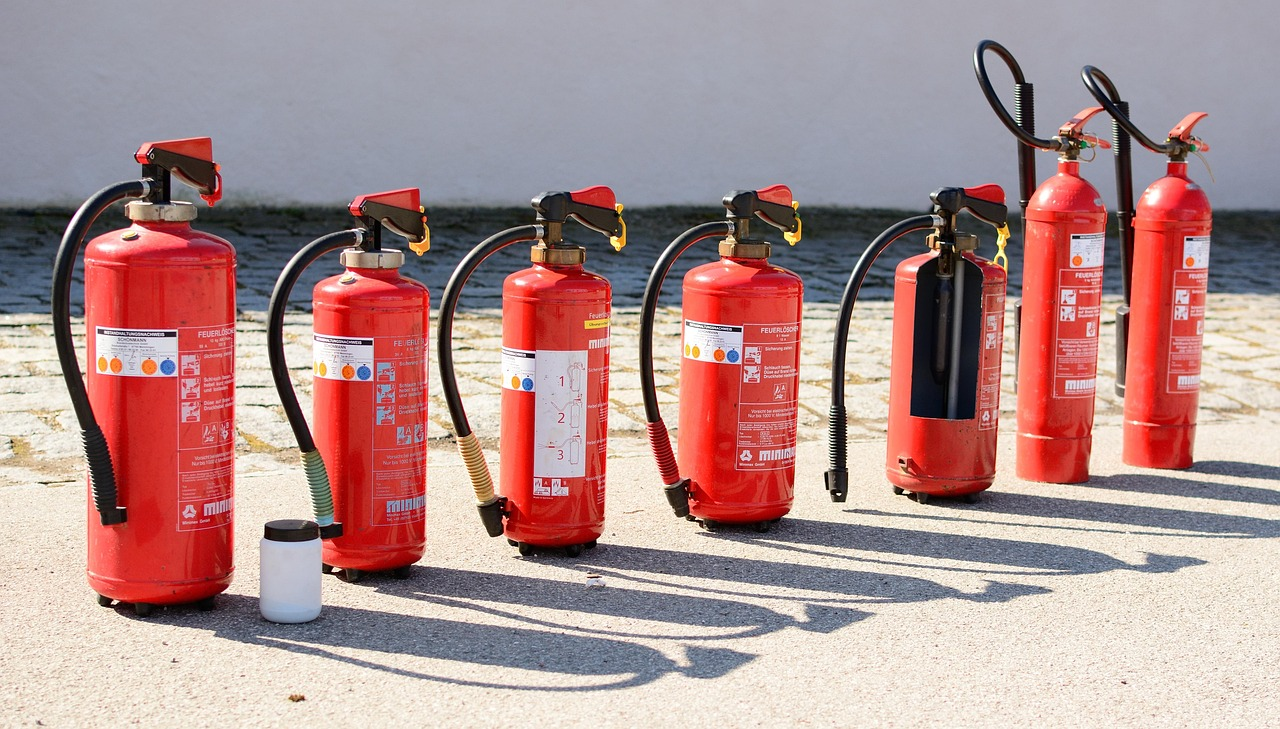
Fire extinguishers are designed to combat specific fire classes. Here’s a breakdown of common types:
1. Water (APW – Air Pressurized Water)
- Suitable for: Class A
- Not for: B, C, D, K fires
- Action: Cools the fire by soaking materials
2. Foam
- Suitable for: Class A & B
- Action: Smothers fire and prevents vapor release
3. Carbon Dioxide (CO₂)
- Suitable for: Class B & C
- Action: Displaces oxygen and cools electrical equipment
- Note: Leaves no residue; not effective on Class A
4. Dry Chemical (ABC Extinguishers)
- Suitable for: Class A, B & C
- Action: Interrupts chemical reaction and coats the material
- Most versatile for general workplaces
5. Dry Powder (Specialized)
- Suitable for: Class D
- Action: Separates fuel from oxygen
- Not for: A, B, or C fires
6. Wet Chemical
- Suitable for: Class K
- Action: Forms a soap-like substance (saponification) to cool and smother grease fires
- Common in commercial kitchens
How to Use a Fire Extinguisher: The PASS Method
Pull the pin – Break the seal.
Aim at the base of the fire – Not the flames.
Squeeze the handle – Discharge the agent.
Sweep from side to side – Cover the entire area.
Tip: Always keep your back to the exit. Never fight a large or spreading fire—evacuate and call emergency services.
Fire Extinguisher Color Codes (International Standards)

Note
Modern extinguishers are red in body color with a colored label or band to denote the type.
In Europe and many other regions, extinguishers are standardized to EN 3 which requires a red body with a colored panel.
In some countries like the UK, the older full-body color codes are no longer allowed but the colored label system remains.
Always check the label for usage instructions—never rely on color alone.
Placement and Maintenance
Mount extinguishers in accessible locations (hallways, near exits)
Perform monthly visual inspections
Conduct annual servicing by certified personnel
Ensure signage is visible and readable
Train staff regularly on how to use them
Fire Prevention Tips
Keep flammable materials away from heat sources
Do not overload electrical circuits
Maintain clean workspaces (free of combustible dust and clutter)
Use proper storage for chemicals
Perform regular fire drills and risk assessments
Fire Risk in Chemical Plants
In industrial environments, especially chemical plants, fire risks are heightened due to:
Flammable chemicals
Pressurized gases
Electrical panels
Hot work (welding, grinding)
Additional Safety Measures:
Install flame detectors and gas sensors
Use explosion-proof equipment
Maintain emergency shutdown systems
Train staff in fire scenarios specific to the plant’s processes
Final Thoughts
Fire safety is a shared responsibility. Whether you’re at home, at work, or in an industrial setting, knowing how fires start, how to prevent them, and how to respond can save lives and property.
“In an emergency, your best weapon is preparation. Don’t wait until the fire starts—be ready before it ever does.”